Is organic cotton the best
answer to a sustainable wardrobe?
Organic cotton is grown with a focus on environmentally friendly methods and materials. We use it because it satisfies three criteria that define us as a sustainable fashion business: our environmental, social and sustainable goals.
environmental
This natural fibre is grown without the use of toxic chemical pesticides and fertilisers, which maintains soil’s natural fertility. Reducing the use of these also means less nitrous oxide is released; nitrous oxide being the potent greenhouse gas which has a global warming potential 300 times greater than carbon dioxide.
social
The working conditions and pay offered to our suppliers matter to us. All of our cotton fabrics are sourced from independent suppliers to then bring our designs to life in-house. Because of this we negotiate a competitive price that reflects the quality of the final product.
Moving towards greater use of organic cotton also brings benefits to local cotton farmers; producing and selling this cotton is more profitable. Whilst there are increased costs associated with growing organically as opposed to conventionally, the environmental benefits mean we are happy to pay more for our materials. With greater demand farmers will be incentivised to grow organically, embracing the environmental benefits along the way.
sustainable
The cotton we use is free from any synthetic materials. This means our clothing is 100% naturally biodegradable. Whether used for composting or for upcycled clothing, you can be sure that your clothes need never be wasted. If you stop wearing them that is!
Is that the end of it, have we found
the perfect eco friendly fabrics?
No. Organic cotton is not perfect. We can’t get away from the fact that growing cotton means a carbon footprint bigger than we would like. Making land arable also means biodiversity is reduced, and growing and processing necessarily means using water and agricultural labour.
Whilst rainwater can be used this is dependent upon supply, and farming land invariably means the use of greenhouse gas emitting machinery. However, using organic hand-picked cotton means reduced emissions, and the use of natural pesticides means crops do not need excess amounts of water to grow healthily.
Because of these reasons we choose to use Indian cotton. All cotton here is hand-picked due to the availability of labour, giving work to people in the most rural areas of the country. Hand-picking cotton is labour intensive, but by growing organic it means work is regulated and no toxic pesticides are transferred onto the skin or breathed in by employees.
" AS WE GROW WE WANT TO EXPLORE THE USE OF EVEN MORE
ECO-FRIENDLY FABRICS
nEW ECO-FRIENDLY FABRICS
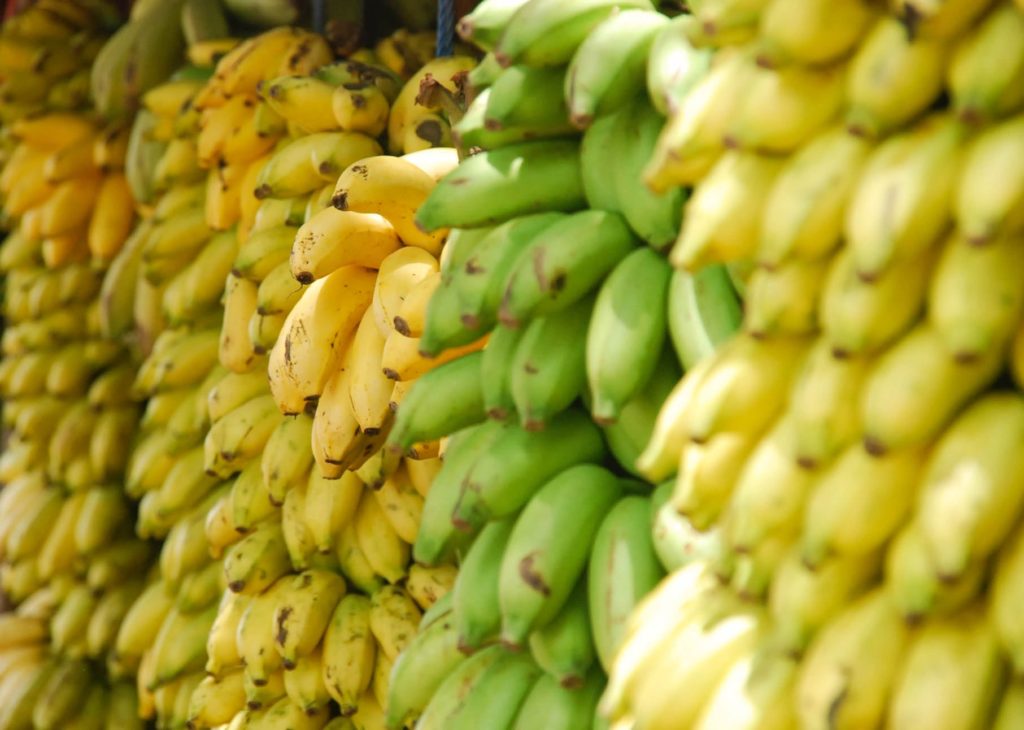
bANANA STALKS
As a by-product of the banana fruit, this raw material requires no additional farming or processing. Not only that but the stalks are naturally breathable, greaseproof, water and heat resistant. Banana production itself is also known to be carbon neutral, and when grown independently (as opposed to intensively) need not be pesticide-heavy.
lOTUS STEMS
Weaving lotus stems into fabrics is not only an age-old sustainable use of a naturally growing plant; it also brings a silk-like texture to our clothes. These handmade materials are also by necessity not suitable for mass-production. This means sourcing it supports local providers and preserves their techniques, whilst also allowing us to select them according to our focus on socially responsible working conditions and pay.
Organic cotton: a good start when it comes to sustainable materials. But we know there
are even better options out there and we can’t wait to start exploring them further.
After delivering fabrics and patterns to our tailors in Jaipur, we decided to have a break up in Amritsar, a place we had always wanted to visit. On our first day we walked through the somewhat calm backstreets, differing from the usual hussle and bussle of your everyday working Indian street.
Winding our way through, we arrived to the Golden Temple area. After covering our heads and handing over our shoes, we started to climb the steps as the glistening temple shone before us, a truly majestic moment.
Flooded with peace, the surroundings were as symbolic as the temple itself. Inside and out, The Golden Temple is, in our opinion, as breathtaking as The Taj Mahal.
Meeting Amritsar Tailors
The city streets are alive with tailors making three-piece suits, dresses and bags. Looking closer you will also spot the very smart Indian Army military uniforms being made.
New, up-cycled and second hand uniforms are for sale, alongside heavy duty canvas and waterproofing essentials for soldiers. After finding so many makers up and down the streets, we were soon out to work again talking and asking makers about fabrics and things they could potentially make over the few days we were there.
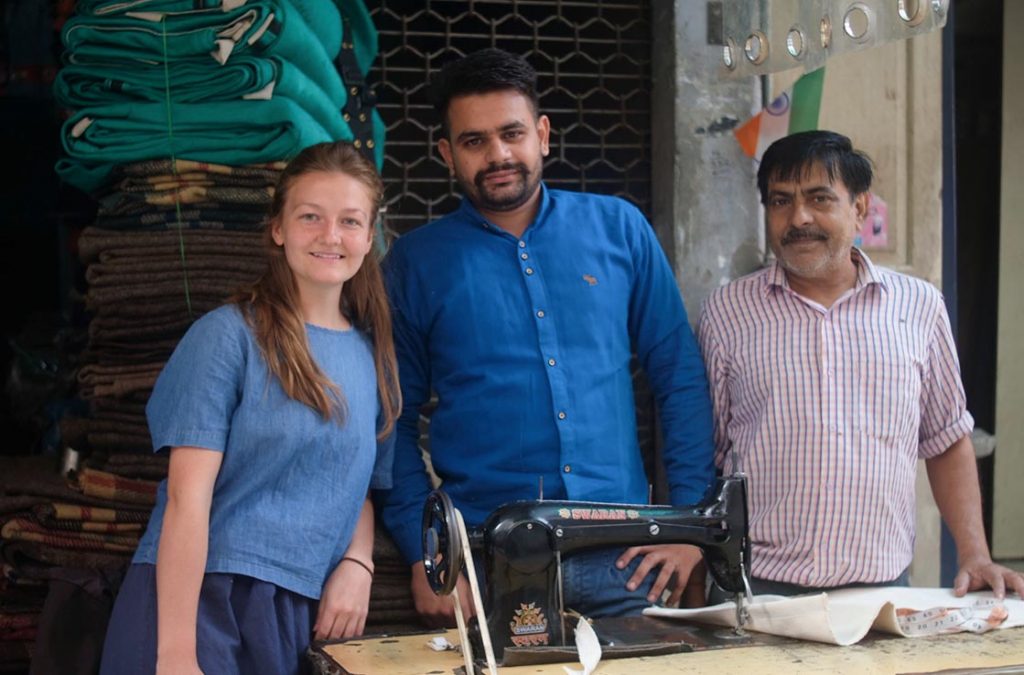
KARIN AND GEE
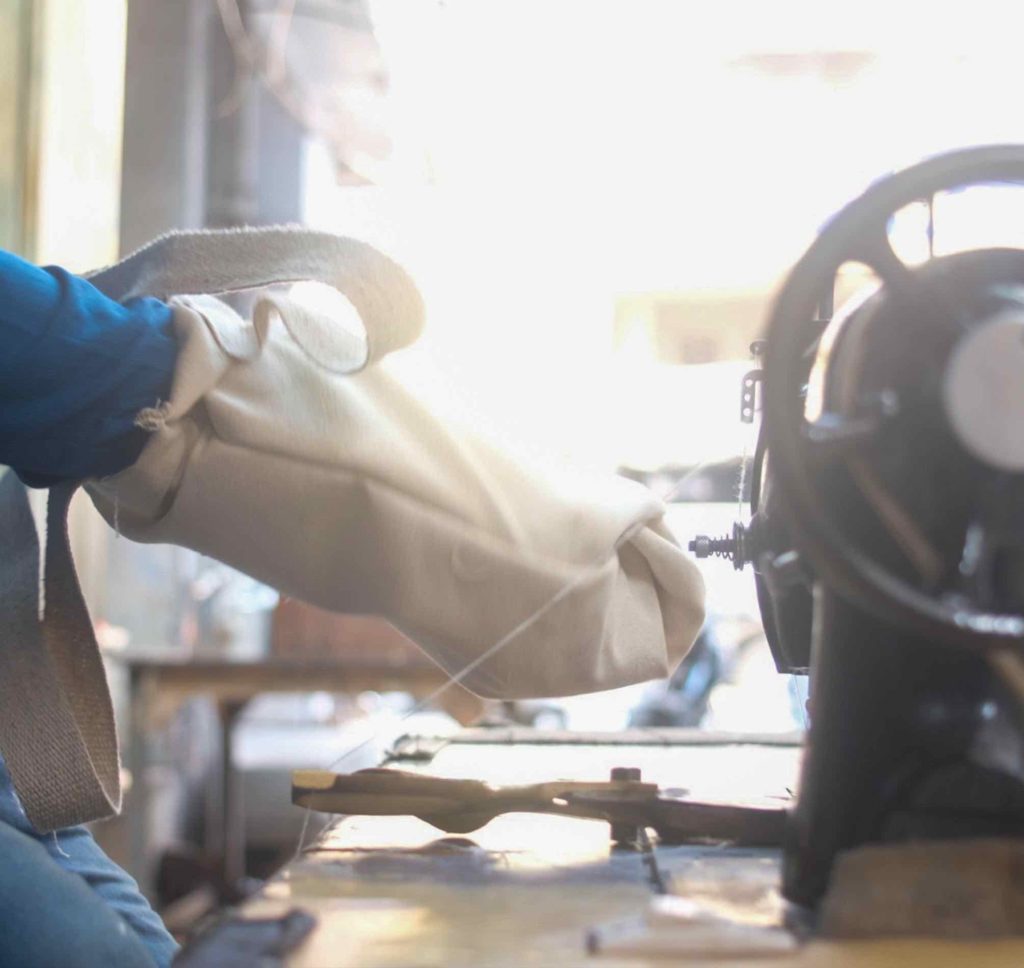
We eventually came across Karin and Gee, a father and son duo sewing on the street outside their military shop. We fell in love with their raw heavy canvas and decided to ask them to make some totes, shoppers and handbags for us on their converted manual sewing machine. Karin soon whipped up some simple yet strong and stylish bags, whilst his father held the fabric in place for stitching.
These guys were a pleasure to work with and we hope to go back for our next collection of bags, and more delicious chai!
This website uses cookies to improve your experience. We'll assume you're ok with this, but you can opt-out if you wish.Got itRead More
Privacy & Cookies Policy
Privacy Overview
This website uses cookies to improve your experience while you navigate through the website. Out of these, the cookies that are categorized as necessary are stored on your browser as they are essential for the working of basic functionalities of the website. We also use third-party cookies that help us analyze and understand how you use this website. These cookies will be stored in your browser only with your consent. You also have the option to opt-out of these cookies. But opting out of some of these cookies may affect your browsing experience.
Necessary cookies are absolutely essential for the website to function properly. This category only includes cookies that ensures basic functionalities and security features of the website. These cookies do not store any personal information.
Any cookies that may not be particularly necessary for the website to function and is used specifically to collect user personal data via analytics, ads, other embedded contents are termed as non-necessary cookies. It is mandatory to procure user consent prior to running these cookies on your website.